Analog Horror: When Nostalgia Becomes a Nightmare
There is something deeply unsettling about a VHS tape that doesn't play the way it should. An emergency broadcast alert airing on a local channel at 3 AM. A children's educational program where the tone shifts imperceptibly into something else entirely. Analog horror exploits this unease with surgical precision, transforming the technological artifacts of the late 20th century into vehicles of pure dread.
What Is Analog Horror?
Analog horror is a subgenre of horror fiction that tells its stories through the lens of obsolete technology: degraded VHS tapes, static-laced television broadcasts, distorted audio recordings, corrupted retro video games. The term itself comes from Local 58, a web series whose tagline — "ANALOG HORROR AT 476 MHz" — gave a name to a movement that had already been taking shape in the margins of the internet.
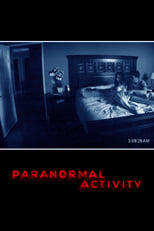
What separates analog horror from traditional found footage comes down to narrative posture. Found footage adopts the subjective perspective of a character who is filming — think The Blair Witch Project or Paranormal Activity. Analog horror presents itself as an impersonal found object: an educational tape, a local television broadcast, a government alert message. Nobody is holding the camera. Nobody is commenting on what's happening. The viewer is alone with a document that was never supposed to exist.
The other fundamental distinction lies in aesthetics. Found footage can be shot in HD without betraying its conventions. Analog horror demands degradation: misaligned tracking, bleeding colors, crackling audio, visual glitches. These imperfections are not decorative — they are the mechanism of fear itself. What you cannot see clearly in the degraded image is always worse than what a clean shot would show you.
The Roots: From The Blair Witch Project to the Internet Age
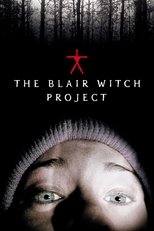
Before the term existed, the foundations of analog horror were already being laid. The Blair Witch Project (1999), shot on VHS and 16mm film, does not strictly qualify as analog horror, but it established two of the genre's cardinal principles: visual degradation as a terror amplifier, and the systematic blurring of the line between fiction and reality. Its marketing campaign — fake missing person posters, fake police reports circulated online — anticipated exactly how analog horror would exploit the internet a decade later.
Ringu (1998) contributed another critical piece: the idea that an analog medium — a VHS tape — could be inherently cursed, carrying a threat that transmits from viewer to viewer. The tape is not just a narrative vehicle; it is the object of horror itself.
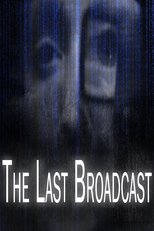
The Last Broadcast (1998), often overshadowed by Blair Witch, also deserves mention. Shot on low-resolution digital video with inserts of degraded footage, it was already experimenting with the mixture of formats and reality levels that would become the genre's signature.
But it was the expansion of the internet — and YouTube in particular — that allowed the subgenre to explode. The platform offered both a free distribution channel and a perfect context: a strange video, without context, buried among millions of others, could be anything. And it is precisely this ambiguity that analog horror learned to weaponize.
The Genre's Visual Language
Analog horror operates through a set of visual and narrative conventions that function as a coherent language.
Degraded media forms the foundation. Tracking lines, video noise, washed-out colors, audio compression — each imperfection adds a layer of opacity between the viewer and what is actually happening on screen. The human brain instinctively tries to reconstruct what hides behind the degradation, and it is in that effort that fear takes root.
The subversion of familiar formats provides the narrative skeleton. Weather bulletins, educational cassettes, advertisements, children's programs, emergency alert system tests — analog horror takes formats designed to reassure and corrupts them from within. The terror comes not from what is shown, but from the moment the viewer realizes that something in this familiar format has gone wrong.
The absence of a visible protagonist radically distinguishes analog horror from other forms of horror. There is typically no one on screen to identify with, no one to verbalize the fear. The viewer is the sole witness, unfiltered, unmediated.
Cryptic worldbuilding ties everything together. Analog horror never tells its stories linearly. Clues are scattered across videos, still images, descriptions, comments. Reconstructing the full mythology of a series requires active work from the community — which explains why these series generate hours of analysis videos on YouTube.
The Web Series That Defined the Genre
Analog horror was born and grew on the internet, and its foundational works are web series, not films.
Local 58 (2015–present) is widely considered the ground zero of the genre as we know it today. Created by Kris Straub, the series presents itself as intercepted broadcasts from an American local television station. Emergency alerts ordering viewers to look at the moon, educational programs whose content slides into the horrific, weather bulletins that disintegrate — Local 58 codified the genre's conventions with remarkable economy.
The Mandela Catalogue (2021–present) propelled analog horror toward a much wider audience. Created by Alex Kister, the series imagines a Wisconsin town infiltrated by entities capable of taking anyone's appearance — a simple concept carried by visual execution that has generated millions of views and a massive fan community.
Gemini Home Entertainment (2019–present) adopts the format of educational tapes and nature documentaries to progressively reveal a cosmic invasion. The series excels at tipping apparently mundane content into pure horror with a single shot.
Marble Hornets (2009–2014), often cited as a direct precursor, demonstrated that YouTube could be a legitimate horror narrative medium well before the term "analog horror" existed. Its Slender Man-adjacent mythology paved the way for everything that followed.
From Short Form to Feature Length
The transition from short form to feature film presents a particular challenge for analog horror. The subgenre draws much of its power from brevity: a three-minute video can sustain a suffocating tension that ninety minutes risks diluting. A few films have nonetheless managed this transition.
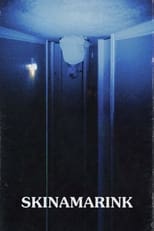
Skinamarink (2022), directed by Kyle Edward Ball, became the movement's flagship film. Shot on a minimal budget with VHS aesthetics pushed to the extreme, the film drops the viewer into a childhood home at night — doors that disappear, a television playing cartoons into the void, near-total darkness pierced only by flashlights. Ball came from the YouTube channel Bitesized Nightmares, where he visualized his viewers' nightmares, and Skinamarink carries that approach to its most radical expression. The film is divisive — its contemplative pace and near-total refusal of conventional narrative are not for everyone — but it proved that analog horror could work at feature length.
Other precursors deserve revisiting through this lens. Ringu and The Blair Witch Project are not analog horror in the strict sense, but they contain the genre's DNA. More recently, the V/H/S franchise — an anthology of short films in found footage and analog aesthetics — occupies hybrid territory between the two subgenres.
Why Analog Horror Works
The power of analog horror lies in a paradox: it uses nostalgia as a weapon. The formats it subverts — VHS tapes, local television broadcasts, educational programs — are associated with childhood, safety, the familiar. By corrupting them, the genre does not merely frighten: it contaminates the memories themselves. After watching Local 58, an emergency alert system test will never sound the same way again.
There is also a democratic dimension to the genre. Analog horror is one of the rare horror subgenres where low technical quality is not a handicap but an asset. A creator with free editing software and an understanding of the genre's codes can produce something genuinely terrifying. This accessibility explains the proliferation of analog horror content on TikTok and Instagram, where the short format and degraded aesthetic find perfect terrain.
The Future of the Genre
Analog horror is still in its early days. The transition to feature films remains experimental, video games are only beginning to explore the genre's potential, and the generation of creators trained on YouTube and TikTok has yet to deliver its mature works. If found footage took a decade between The Blair Witch Project and Paranormal Activity before exploding commercially, analog horror may follow a similar trajectory — with Skinamarink as the inflection point.
One thing is certain: as long as people carry childhood memories tied to cathode-ray screens and VHS tapes, analog horror will have raw material to transform that nostalgia into nightmare.